Proscan’s Advance Technology model designed to reduce false alarms, improve threat detection, and optimize security operations

Advancing new technology
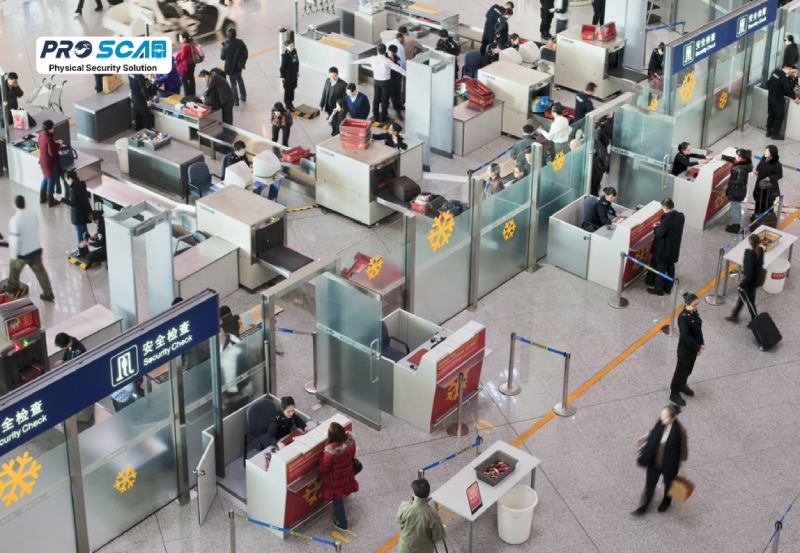
Security screening today requires more than simply detecting the presence of metal. Airports, schools, government buildings, and public facilities operate under increasing pressure to ensure safety while maintaining smooth traffic flow and a positive user experience.
Walk-through metal detectors (WTMDs) today were designed for basic detection tasks. However, as security threats become more sophisticated and screening volumes continue to rise, these systems struggle to meet modern operational demands. False alarms, inconsistent sensitivity, and limited threat recognition create inefficiencies and increase operational risks.
To address these challenges, Proscan introduces its next-generation technology model, a smart metal detector system engineered as a complete security screening solution rather than a simple hardware upgrade.

The security problems customers are facing today
Despite years of deployment, many security operators continue to face the same recurring issues at checkpoints.
1. Excessive false alarms create congestion
WTMDs today frequently trigger alarms for harmless metal objects such as keys, coins, belts, or mobile phones. These false alarms slow down screening lines, require unnecessary secondary checks, and reduce overall throughput.
2. Small dangerous items are difficult to detect
Conventional systems detect metal mass but cannot distinguish between harmless objects and dangerous metal shapes. As a result, small blades or concealed sharp objects may go unnoticed, increasing security risk.
3. Sensitivity is unstable across different environments
Fixed sensitivity settings do not adapt well to changes in electromagnetic interference, crowd density, or building structure. This leads to inconsistent detection accuracy and unreliable performance. (1)
4. Slow screening increases operational pressure
When alarm zones are not precise, security staff must perform manual body checks. This increases screening time, labor requirements, and checkpoint congestion.

New WTMD technology – The complete solution customers need
Proscan’s new technology in Walk-Through Metal Detector is built on a technology-driven screening architecture, designed to move beyond basic metal detection and directly address the operational weaknesses of WTMD systems today. Each core technology is engineered to solve a specific, real-world security problem from false alarms and unstable sensitivity to slow throughput and imprecise threat localization.
1. Smart sensitivity adjustment to reduce false alarms
Smart Sensitivity Adjustment is an adaptive detection mechanism that dynamically regulates sensitivity levels based on real-time signal analysis, rather than relying on a single fixed threshold.
1.1. How it works
The system continuously monitors environmental signals, background electromagnetic noise, and metal signal intensity. Using algorithm-based logic, there are more sensitive options level to suppress harmless metal interference while preserving high responsiveness to potential threats.
1.2. How it solves customer problems
This approach directly addresses the false-alarm issue caused by everyday metal items such as keys or mobile phones. By filtering non-threatening signals, checkpoints experience fewer interruptions, smoother flow, and significantly reduced reliance on manual rechecks without compromising detection accuracy.
2. Dangerous object pattern recognition for accurate threat detection
Dangerous Object Pattern Recognition is an advanced signal-analysis technology that identifies characteristic metal signatures associated with weapons or sharp objects.
2.1. How it works
Instead of measuring metal quantity alone, the system analyzes waveform patterns generated by metal objects and compares them against a database of known threat signatures. This enables differentiation between harmless personal items and objects with dangerous shapes or structural properties.
2.2. How it solves customer problems
WTMDs today cannot distinguish intent. This technology closes that gap by improving detection of small blades, concealed sharp objects, and irregular metal components – reducing the risk of dangerous items passing through screening undetected.
3. Three-level security password system for enhanced operational control
The new-generation WTMD technology introduces a three-level security password management system, designed to ensure clear role separation, secure operation, and controlled system access across different deployment environments.
This structured access model enhances operational safety and governance while maintaining system simplicity and ease of use.
3.1. How it works
The system is built with three distinct password levels, each with clearly defined permissions and responsibilities:
Level 1: Administrator
The Administrator level has the highest authority within the system.
Users at this level can:
- Manage and configure system permissions;
- Perform advanced system settings;
- View and download operation history and log data.
This level is typically assigned to system owners or authorized management personnel.
Level 2: Supervisor
The Supervisor level has full visibility of system functions, but limited control authority.
Users at this level can:
- View all system functions and settings;
- Operate the equipment during daily use;
- Cannotmanage permissions or access historical data.
This level is suitable for on-site supervisors responsible for oversight without administrative control.
Level 3: Operator
The Operator level is designed for front-line operational staff. Users at this level:
- Can operate the equipment for routine screening;
- Have no access to system management functions;
- Cannot view or query historical or configuration data.
This ensures safe operation while minimizing the risk of unintended system changes.
3.2. How it solves customer problems
Traditional systems often rely on a single or limited access mechanism, creating risks related to unauthorized access, operational lockout, or loss of control during emergencies. The four-level security password system eliminates these vulnerabilities by clearly separating responsibilities and access rights.
For customers, this means:
- Stronger protection against unauthorized system changes;
- Secure remote control and backup access from headquarters;
- Reduced operational risk during unexpected incidents;
- Greater confidence in system continuity and governance.
By implementing a structured, multi-level security access model, the new WTMD technology not only enhances system security but also provides organizations with greater control, resilience, and peace of mind throughout the entire lifecycle of deployment and operation.
4. Multi-zone precision for faster secondary screening
Multi-Zone Precision Detection divides the detection field into 33 to 93 independently controlled zones, each with its own sensitivity parameters.
4.1. How it works
When a metal object is detected, the system identifies the precise zone where the signal originates: head, torso, waist, or lower body – rather than triggering a general alarm.
4.2. How it solves customer problems
Precise localization eliminates unnecessary full-body searches. Security personnel can immediately focus on the relevant area, accelerating secondary screening, reducing physical contact, and improving checkpoint efficiency.
5. Adaptive security levels for different use environments
Adaptive Security Levels allow operators to configure detection behavior according to different risk profiles and operational requirements.
5.1. How it works
The WTMD adjusts sensitivity logic, alarm thresholds, and signal interpretation rules based on selected security modes. These modes are designed to accommodate varying screening priorities without hardware modification.
5.2. How it solves customer problems
Instead of deploying different systems for different environments, operators can use a single WTMD platform across schools, airports, government buildings, and public venues – simplifying management, reducing training complexity, and maximizing return on investment.
Video test – The solution proven in action
Customer benefits – What problems are solved
New technology in WTDM is designed to deliver measurable operational, financial, and risk-management benefits for organizations responsible for security screening. By addressing long-standing inefficiencies, the system helps operators achieve higher performance with lower operational pressure.
1. Operational benefits – Higher throughput with lower operating costs
By significantly reducing false alarms and improving detection accuracy, the new WTMD allows checkpoints to process people faster without compromising security. Precise multi-zone localization minimizes unnecessary manual checks, enabling security staff to focus only on verified alerts.
For operators, this translates into:
- Reduced congestion during peak hours;
- Lower manpower requirements at checkpoints;
- More predictable and stable screening flow;
- Improved utilization of existing security infrastructure.
As a result, organizations can handle higher traffic volumes without increasing staffing levels or expanding checkpoint space.
2. Safety benefits – Stronger risk control and compliance assurance
Accurate detection of dangerous items, combined with stable sensitivity performance, significantly reduces the risk of missed threats. The system’s intelligent signal processing ensures consistent detection even in complex environments, helping organizations maintain a higher and more reliable security standard.
From a management perspective, this provides:
- Greater confidence in threat detection accuracy;
- Reduced exposure to security incidents caused by detection gaps;
- Stronger compliance with internal security protocols and regulatory requirements.
This level of reliability supports long-term risk mitigation and reinforces trust in the security operation.
3. User experience benefits – Smoother screening without sacrificing security
A smoother screening experience benefits not only individuals passing through checkpoints, but also the organizations operating them. Fewer unnecessary alarms and faster processing reduce frustration, improve cooperation during screening, and lower stress for both users and security staff.
Key outcomes include:
- Shorter waiting times;
- More professional and controlled screening interactions;
- Improved public perception of the security operation.
By balancing efficiency and accuracy, the new WTMD enables organizations to deliver high-security screening with minimal disruption.
Why upgrading now is necessary
Metal detection systems today are no longer sufficient for modern security requirements. Upgrading to a smart technology WTMD solution eliminates persistent operational pain points, improves safety standards, and represents a long-term investment in efficient security infrastructure.
Conclusion
The next-generation technology in Walk-Through Metal Detector from Proscan is designed to address real security challenges faced by today’s operators. By combining smart sensitivity adjustment, AI-powered signal processing, multi-zone precision, and adaptive security levels, it delivers a complete and future-ready security screening solution.