
High population density, mixed-use neighborhoods, and constant movement through public spaces mean that risks can emerge quickly and unpredictably. In cities such as Sydney, recent developments have highlighted a broader shift in how authorities approach safety – not through heightened alarm, but through systematic, preventive control at key public touchpoints.
Rather than relying solely on permanent infrastructure or reactive measures, city planners and security operators are adopting flexible screening strategies designed to protect people while preserving the openness and flow that define urban life.
Safety challenges in high-density cities
High-density cities present a unique set of safety challenges that differ significantly from those of low-traffic or isolated environments.
Large volumes of people moving simultaneously through transport hubs, commercial centers, residential complexes, and public venues create conditions where:
- Risks can spread rapidly
- Situational awareness is harder to maintain
- Traditional, static security models become inefficient
In these environments, even minor disruptions can escalate quickly if not detected early. The challenge for city authorities is not only to prevent threats, but to do so without disrupting daily life or creating unnecessary friction for the public.
As a result, urban safety strategies are increasingly focused on:
- Early-stage risk detection
- Controlled yet unobtrusive access points
- Scalable systems that adapt to real-time crowd dynamics
This reflects a growing consensus: effective safety in high-density cities must be proactive, adaptive, and minimally disruptive.
The changing nature of public safety in dense urban environments
Modern cities are no longer structured around clearly separated zones. Residential areas intersect with transport corridors, commercial districts, and public gathering spaces. This interconnected layout makes it difficult to isolate risk within a single location.
As a result, urban safety strategies are evolving. The focus is shifting from static security models to adaptive systems that can respond to real-time conditions. Authorities increasingly prioritize early-stage risk detection, controlled access points, and scalable solutions that can be deployed where and when they are needed.
This evolution reflects a broader understanding: effective public safety must be proactive, not disruptive.
Why early screening matters in crowded public areas
In high-traffic environments, waiting until a threat escalates is not an option. Preventive screening plays a critical role in identifying potential risks before they move deeper into public spaces.
Early screening offers several advantages:
- It reduces uncertainty at entry points
- It minimizes the need for intervention later
- It supports orderly movement during peak hours
- It reinforces public confidence through visible yet neutral measures
Importantly, these benefits are only realized when screening tools can operate efficiently at scale, without causing congestion or anxiety.
Walk-through metal detectors as a practical urban safety tool
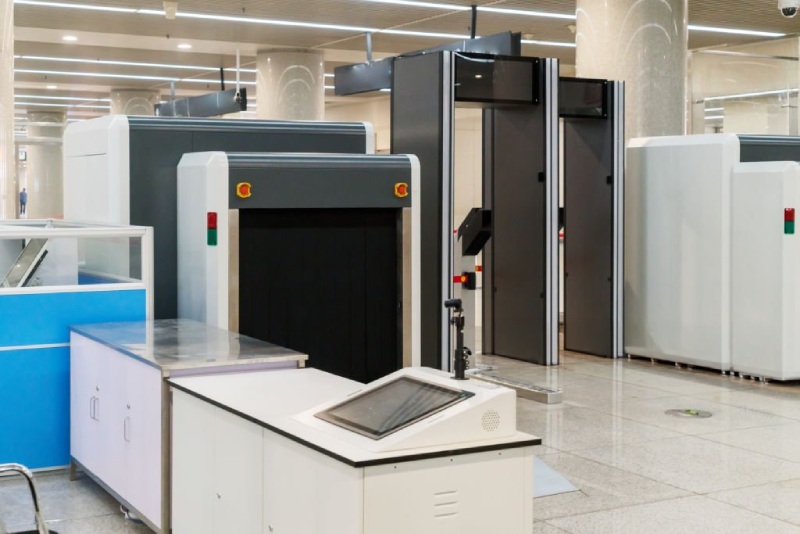
Within this context, walk-through metal detectors (WTMDs) have become an increasingly relevant component of urban safety planning. Unlike manual checks or ad-hoc inspections, WTMDs provide a standardized, technology-driven method for detecting metallic threats as people enter controlled zones.
In high-density urban settings, WTMDs help address several critical challenges:
1. Managing large volumes of foot traffic
Public areas such as transit-adjacent zones, event perimeters, or residential access points often experience surges in pedestrian flow. WTMDs are designed to process large numbers of people quickly, helping maintain movement while applying consistent screening criteria.
2. Supporting flexible deployment
Modern WTMD systems can be installed temporarily or repositioned as needed. This flexibility allows authorities to adjust screening locations based on risk assessments, special events, or changes in crowd patterns, without permanent construction or disruption.
3. Reducing reliance on subjective judgment
Technology-based screening ensures that detection standards remain consistent. This minimizes dependence on individual discretion and supports fair, predictable application of safety measures across diverse communities.
4. Acting as a preventive deterrent
Visible screening at access points serves as a deterrent, discouraging prohibited items from entering public spaces in the first place. This preventive effect reduces downstream risk and the need for reactive enforcement.
How Proscan’s walk-through metal detectors fit urban needs
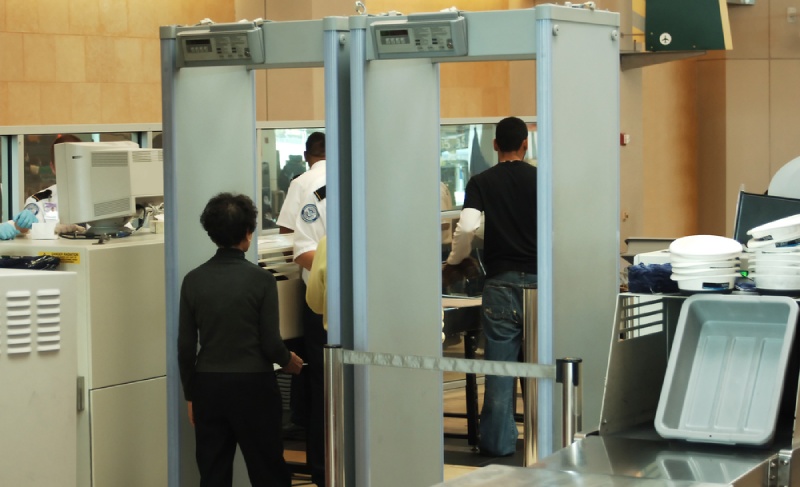
Proscan’s walk-through metal detectors are engineered to support the realities of urban environments where reliability, speed, and adaptability are essential.
Key characteristics that align with modern city safety requirements include:
- High throughput performance, suitable for crowded public settings
- Adjustable sensitivity levels, allowing screening to match different risk profiles
- Stable operation across varied environments, from indoor facilities to semi-outdoor entry points
- Rapid setup and redeployment, supporting temporary or mobile screening strategies
- Dangerous metal objects can be identified
Rather than imposing rigid security boundaries, these systems integrate into existing movement patterns, enabling cities to enhance safety while maintaining accessibility.
———————————————————-
PROSCAN – Global Security Solutions Provider
Website: www.proscanglobal.com
HQ: TF Office Building – HCMC – Viet Nam
Email: support@proscanglobal.com