In March 2026, a concerning situation unfolded at Buckhorn Middle School in Alabama. A student attempted to bring a firearm onto campus, but the weapon was detected immediately by the school’s security screening system. The individual was apprehended before entering the school building, and the situation was contained without injuries or further escalation.
While the incident raised understandable concerns, it also demonstrated something critical: effective security screening can prevent dangerous situations before they happen.
For many security professionals, this event serves as a reminder that prevention – not response is the true goal of modern security infrastructure.
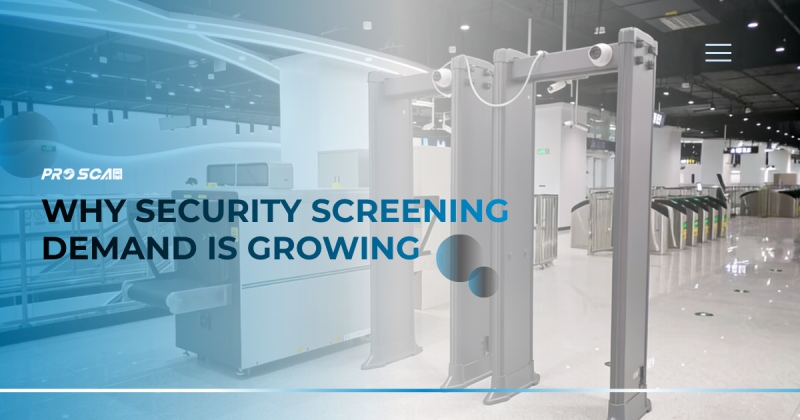
Why security screening demand is growing
Across the globe, security risks in public and semi-public environments are becoming increasingly complex and unpredictable. Incidents involving unauthorized weapons, disruptive behavior, or potential threats are no longer isolated cases, they are part of a broader pattern.
As a result, schools, factories, public venues, and institutions are facing growing pressure to strengthen their security infrastructure. The focus is shifting from reactive measures to preventive systems that can detect risks at the earliest possible stage. This shift is not just a trend, it is becoming a baseline expectation.
Across the world, organizations are increasingly investing in security screening infrastructure. Several factors are driving this shift:
1. Rising public safety expectations
Communities today expect higher levels of protection in public and shared environments. Schools, event venues, and workplaces are under increasing pressure to ensure that safety measures are visible and effective.
Security screening helps create controlled entry points where threats can be detected early.
2. Preventive security strategies
Security professionals are moving away from purely reactive approaches. Instead of focusing only on surveillance or response systems, organizations are investing in technologies that prevent threats from entering protected areas in the first place.
Entry screening is a key component of this strategy.
3. Operational efficiency requirements
High-traffic environments must maintain smooth operations while implementing security measures. Screening systems therefore need to balance two critical factors:
- Accurate threat detection
- Efficient movement of people
Systems that cause excessive delays or generate frequent false alarms can disrupt operations and reduce the effectiveness of security protocols.
The evolution of metal detection technology
Modern walk-through metal detectors are very different from earlier generations of security screening equipment.
Advances in detection technology have improved both accuracy and operational performance.
Today’s systems typically incorporate features such as:
1. Multi-zone detection
Instead of simply indicating the presence of metal, modern detectors can identify the approximate location of metallic objects on the body. This allows security personnel to conduct faster and more targeted inspections.
2. Adjustable sensitivity
Different environments require different detection thresholds. Adjustable sensitivity settings allow security teams to configure systems based on operational needs and risk levels.
3. Reduced false alarms
One of the biggest challenges in security screening is minimizing unnecessary alarms caused by everyday items such as keys, belt buckles, or jewelry. Modern detection systems use improved algorithms and calibration techniques to reduce these disruptions.
4. High throughput capability
In locations where large numbers of people must pass through security checkpoints, screening systems must operate quickly without sacrificing detection accuracy.
These technological improvements are helping organizations maintain strong security measures without interrupting daily operations.
The importance of system integration
Security screening does not operate in isolation.
Increasingly, screening systems are integrated into broader security ecosystems that include:
- Access control systems
- Surveillance and monitoring platforms
- Security management software
- Incident reporting systems
This integration allows security teams to monitor screening operations more effectively and respond to potential threats with greater coordination.
In large facilities, networked screening systems can also allow centralized monitoring of multiple checkpoints, improving situational awareness and operational efficiency.
ProScan’s perspective: Security begins at the entry point
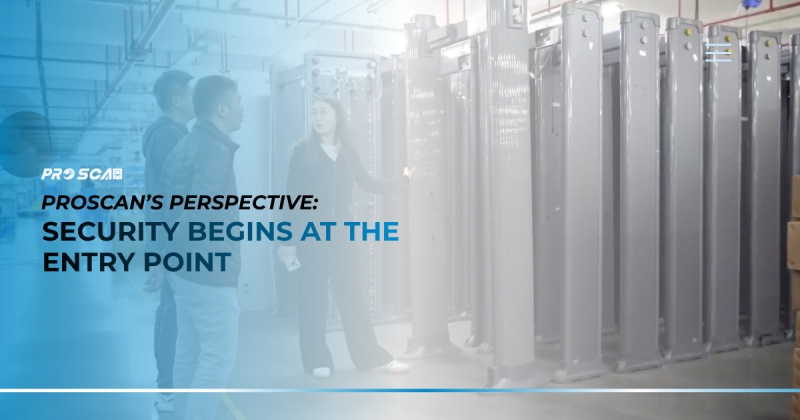
At ProScan Global, we believe that effective security begins with reliable and well-designed entry screening systems.
Security technology must do more than detect threats – it must also support the daily operations of the environments it protects. This requires a combination of engineering reliability, operational flexibility, and intelligent system design.
For screening systems to be effective in real-world environments, they must deliver:
- Stable detection performance
- Accurate identification of metallic threats
- Low false alarm rates
- Efficient throughput for high-traffic environments
- Adaptability to different operational scenarios
Equally important is the ability to customize solutions based on local requirements. Different facilities face different challenges, and security technology must adapt accordingly.
Through flexible OEM and product customization capabilities, our security solutions can be configured to meet specific operational needs, regulatory requirements, and your business.
Prevention is the real measure of security
One of the most important lessons from the Buckhorn Middle School incident is that successful security often goes unnoticed.
When security systems work effectively, incidents are prevented before they develop into crises. The public rarely sees these preventive successes, but they are a critical part of maintaining safe environments.
In this case, the detection system did exactly what it was designed to do: identify a potential threat at the entry point and allow security personnel to respond immediately.
- No panic.
- No escalation.
- No harm.
That is what effective security screening is meant to achieve.
The future of security screening: From detection to intelligent prevention
As security risks continue to evolve, the future of security screening is no longer defined by detection alone but by how early, how accurately, and how seamlessly threats can be prevented.
Across industries, organizations are moving toward intelligent and preventive security ecosystems, where screening systems are integrated into broader operational workflows. The next generation of security solutions will focus on:
- Higher detection accuracy with fewer false alarms
- Seamless high-throughput screening in complex environments
- System integration and centralized monitoring
- Flexible configuration to adapt to diverse operational needs
Security screening is becoming not just a checkpoint, but a critical part of infrastructure design, supporting both safety and operational continuity.
Ultimately, the goal is not simply to detect threats, but to enable environments where people can move, work, and interact safely without disruption.
ProScan Global: The future of intelligent security inspection.
- 20+ Years of R&D excellence;
- Robot-automated manufacturing for 100% coil stability;
- Full spectrum OEM/ODM: walkthrough metal detector, handheld and shoe scanners.
Partner with us now:
- Website: proscanglobal.com;
- Email: support@proscanglobal.com;
- Phone number: +971 58-517-9886;
- Facebook: facebook.com/proscanglobal/.
As real-world incidents continue to highlight the importance of early detection, one thing is clear: “The future of security belongs to systems that prevent risks before they become incidents.”