
Recent Halloween weekend shootings across the United States have once again underscored the acute vulnerabilities faced by crowded entertainment districts, public venues, and night-life hubs. Implementing comprehensive physical screening technologies-such as walk-through metal detectors, handheld screening units, and under-vehicle surveillance systems-is essential to detecting concealed threats early, securing entry points, and safeguarding communities during large-scale public gatherings.
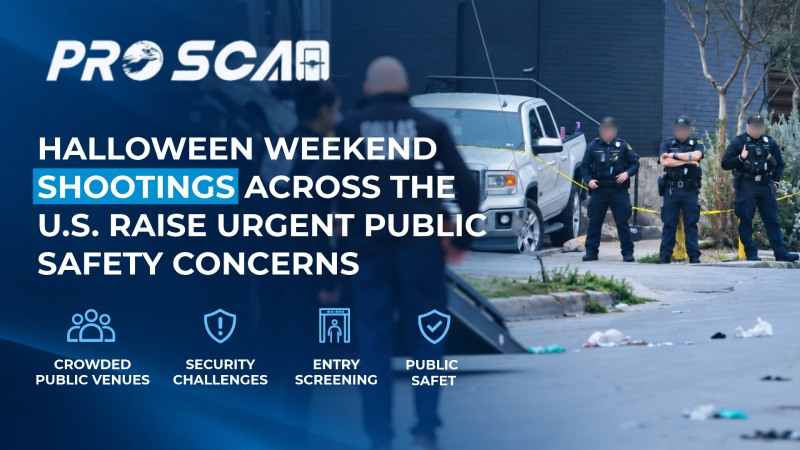
What happened during Halloween weekend across the U.S.?
1. Multiple shooting incidents reported across several states
During the 2026 Halloween weekend, a widespread series of violent incidents unfolded across multiple cities in the United States, raising severe public safety concerns. Gunfire broke out in nightlife districts, street parties, and commercial gathering areas, leaving dozens dead and scores injured across several states.
Reports from law enforcement agencies highlighted tragic events ranging from targeted violence at commercial locations to chaotic shootings near college campuses and public entertainment venues. The sheer frequency and geographic spread of these incidents emphasize that unmonitored public gatherings remain highly vulnerable targets when adequate security perimeters and access control measures are lacking. (1)
2. Dallas shootings highlight security concerns in entertainment districts
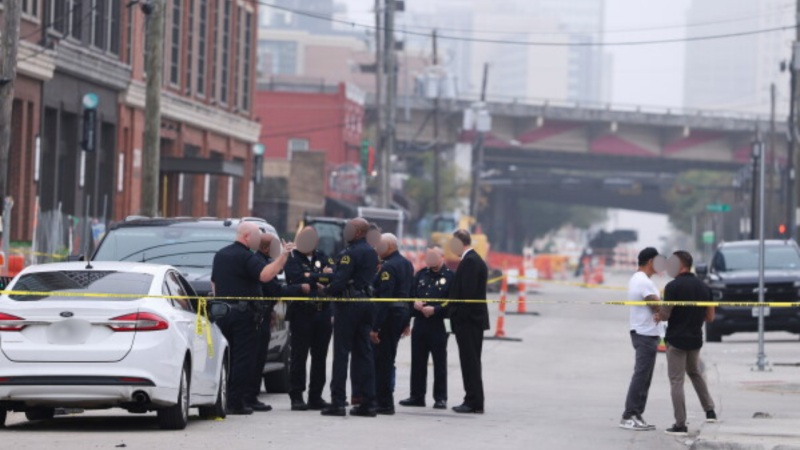
A poignant example of these escalating security challenges occurred in Dallas, Texas, where multiple violent incidents disrupted the Deep Ellum entertainment district. Over a condensed timeframe during the holiday celebrations, separate shootings resulted in four fatalities and left fifteen others wounded, overwhelming local emergency responses and shaking public confidence.
Entertainment zones like Deep Ellum-characterized by dense pedestrian traffic, multiple venue entrances, and open-air street movements-present complex operational environments for law enforcement. The incidents clearly demonstrate that traditional law enforcement patrols alone cannot fully prevent armed threats from entering high-density recreational zones without structured, hardware-backed security checkpoints. (2)

Why crowded public venues face security challenges during major events
1. Large crowds and increased visitor activity
Building upon the vulnerabilities observed during nationwide holiday events like Halloween, managing massive crowds presents severe operational bottlenecks for security teams. High visitor density severely restricts line-of-sight for security personnel, making it exceedingly difficult to spot suspicious behaviors or concealed weapons visually.
Furthermore, as foot traffic surges at venue entrances and public thoroughfares, traditional manual inspection methods become slow and inefficient, creating severe congestion that can itself become a safety hazard. Balancing rapid attendee throughput with thorough security vetting requires specialized screening protocols that do not compromise operational flow.
2. Access control and visitor screening limitations
A primary driver behind the security failures at major event perimeters is the absence of unified access control and systematic screening infrastructure. Many public venues, open-air entertainment districts, and temporary event sites rely heavily on visual checks or localized staff presence rather than standardized physical inspection gateways.
Without dedicated screening points equipped with high-sensitivity metal detection systems, security staff cannot effectively identify concealed firearms, edged weapons, or prohibited metallic items before individuals gain access to crowded inner zones. Establishing controlled access zones is therefore a vital prerequisite for preventing dangerous contraband from entering sensitive public spaces.
Read more: What is happening in US Airports? Why is it so gridlock?
How public venues can strengthen their security screening procedures
1. Establishing structured entry screening procedures
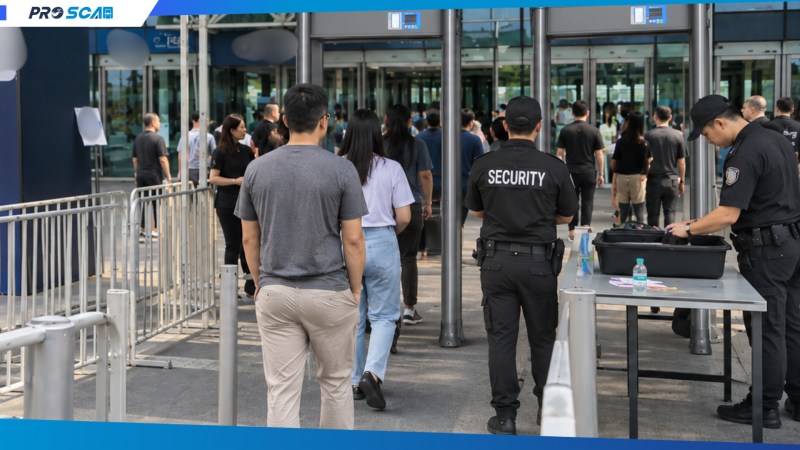
Transitioning from passive security monitoring to proactive threat prevention requires public venues to establish clearly defined, multi-tiered entry screening procedures. A structured perimeter design ensures that all attendees are guided through designated entry lanes where systematic security protocols can be consistently enforced.
By segmenting high-traffic entryways into organized lanes, security teams can maintain controlled pedestrian flow, perform orderly bag checks, and execute physical screenings efficiently without causing unnecessary bottlenecks. Implementing clear access control boundaries forms the first line of defense in isolating potential threats before they reach main event spaces.
2. Using metal detection equipment as part of security screening
To complement structured entry pathways, deploying professional metal detection equipment is essential for identifying concealed weapons accurately and swiftly. Utilizing multi-zone walk-through metal detectors at primary entry gateways allows security personnel to locate metallic threats on a person’s body with pinpoint precision, drastically reducing inspection time per individual.
For targeted secondary screening, specialized handheld metal detectors empower security guards to conduct non-invasive, detailed body scans. Furthermore, incorporating specialized hardware such as shoe scanners and under-vehicle surveillance systems (UVSS) ensures that both pedestrian access points and vehicle loading zones maintain uncompromised security integrity.
3. Combining security technology with trained personnel
While advanced inspection hardware provides the foundation for accurate threat detection, maximizing its effectiveness requires seamless integration with well-trained security personnel. Security guards must be fully proficient in operating walk-through and handheld detection systems, recognizing equipment alarm indicators, and executing standardized response protocols when weapons are detected.
Furthermore, combining physical screening hardware with trained security staff enables continuous threat assessment and swift de-escalation. Technology serves as a force multiplier for security teams, empowering personnel to maintain a visible, reassuring security presence that deters potential offenders while protecting event attendees.
Read more: Security equipment for FIFA World Cup events: How to protect millions of fans?
ProScan Global: Intelligent security inspection equipment supplier and manufacturer
Addressing the complex public safety challenges highlighted by recent high-profile incidents requires robust, commercial-grade screening technologies engineered for reliability. ProScan stands as a leading manufacturer and international distributor of intelligent security inspection solutions tailored for high-traffic public venues, government facilities, and critical infrastructure.
Our comprehensive product catalog includes high-precision multi-zone walk-through metal detectors (such as the 600T and 668CA series), versatile handheld metal detectors (Z520, Z720 Pro, Z620), advanced shoe scanners, and high-resolution under-vehicle surveillance systems (UVSS).
Designed to deliver high throughput, low false-alarm rates, and exceptional detection sensitivity, ProScan Global’s hardware empowers venue operators to establish uncompromising entry screening perimeters that effectively safeguard public spaces.
The tragic gun violence during the Halloween weekend across the U.S. serves as a stark reminder of the critical need for modernized public safety infrastructure. Protecting crowded venues and entertainment districts requires shifting from reactive emergency responses to proactive entry screening. By deploying intelligent metal detection equipment and structured access control systems, venue operators can deter violent incidents and ensure safe environments for attendees.