
The staging of a mega sporting event like the FIFA World Cup represents the absolute pinnacle of global sports entertainment, but for venue operators, system integrators, and security procurement networks, it represents one of the most complex logistical and perimeter protection challenges in existence. Securing these high-profile environments requires moving far beyond basic, manual policing. For B2B security distributors and government procurement teams, engineering a flawless tournament defense demands a deeply integrated, multi-layered screening infrastructure. This comprehensive analysis breaks down the core structural threats facing modern stadium perimeters and is necessary to secure international mega-events without compromising the spectator experience.

Security challenges at World Cup and large sporting events
To design an effective checkpoint infrastructure, procurement officers must first analyze the unique, compounding pressure points that converge during an international tournament. Modern stadium security operations operate under a triple constraint: they must simultaneously process unprecedented numbers of people, detect an increasingly sophisticated spectrum of threats, and maintain a seamless, welcoming atmosphere for international visitors.
1. Massive crowd management
The sheer volume of human traffic during a World Cup match creates an extreme throughput bottleneck at stadium perimeters. Tens of thousands of fans arrive at the outer gates concurrently, often concentrated within a tight 60-to-90-minute window before kickoff. This localized surge places immense strain on perimeter access control points.
From a B2B technical perspective, traditional screening systems often fail under these conditions due to slow processing cycles or high false-alarm rates. When a metal detector triggers frequent false positives due to harmless personal items like belt buckles, coins, or footwear shanks, the entire entry line grinds to a halt.
The resulting crowd congestion outside the gates creates a severe operational vulnerability, transforming waiting fans into a high-density target in a soft, unprotected zone. To mitigate this risk, stadium integrators require high-throughput inspection hardware equipped with advanced digital signal processing (DSP) to maximize flow rates while maintaining strict screening depth.
2. Diverse security threats
The threat landscape facing modern sporting arenas has expanded far beyond traditional prohibited items like pyrotechnics, flares, and smoke bombs. Today, security architectures must be engineered to intercept a complex, diverse matrix of asymmetric threats. These encompass concealed tactical weapons, metallic and non-metallic improvised explosive devices (IEDs), chemical agents, and unauthorized electronic surveillance or tracking gear.
Furthermore, risks extend to the vehicle access points servicing teams, VIPs, and logistical supply chains. Threat actors can exploit delivery trucks or media vehicles to smuggle contraband beneath the chassis, bypassing standard pedestrian gates entirely.
Because threats can be concealed inside personal baggage, sewn into heavy winter apparel, hidden within the structure of a shoe, or mounted to the undercarriage of a vehicle, a singular screening method is fundamentally obsolete. Procurement networks must deploy a layered, multi-zone hardware framework capable of identifying threats across every possible vector of entry.
3. Maintaining fan experience while ensuring safety
While the primary objective of any stadium operator is absolute perimeter integrity, the commercial success of a major sporting event relies heavily on the spectator experience. Imposing an overly aggressive, heavy-handed, or visibly intrusive security protocol can alienate fans, prolong wait times, and damage the event’s global brand.
B2B system integrators are therefore tasked with a difficult balancing act: implementing maximum security enforcement while keeping the technology as non-intrusive and frictionless as possible. The solution lies in utilizing intelligent, automated hardware that can differentiate between everyday consumer items and genuine tactical threats without forcing fans to undergo slow, invasive manual searches.
By deploying rapid-scanning, highly accurate hardware at primary gates, venue managers can achieve a seamless “walk-through” flow that respects the fan journey while maintaining an uncompromised defensive perimeter.
Essential security equipment used at world cup venues
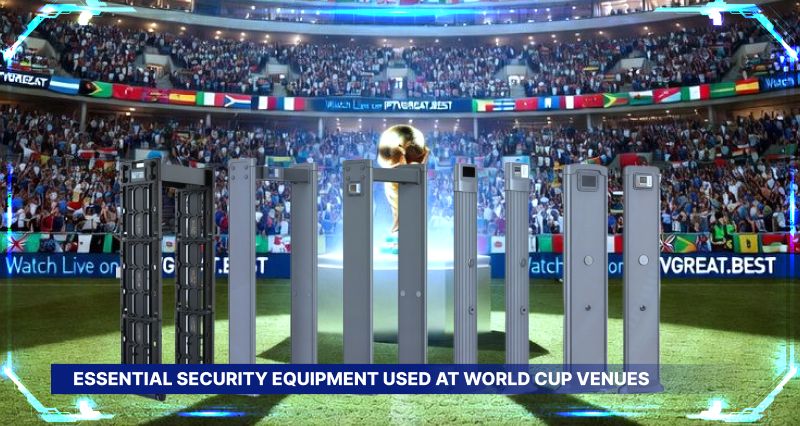
Achieving the precise balance of high security and fluid throughput requires a carefully structured, multi-tiered deployment of specialized inspection hardware. ProScan Global’s specialized product ecosystem is explicitly engineered to handle these high-demand workflows, creating a series of interlocking defensive gates from the vehicle perimeter to the interior stadium turnstiles.
1. Walk-through metal detectors for stadium entrances
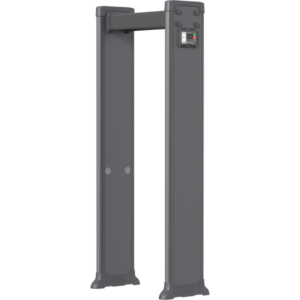
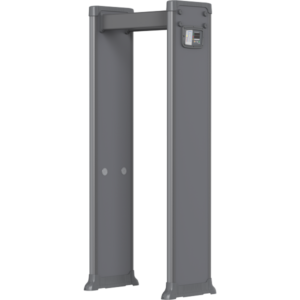
The primary line of defense at any stadium pedestrian gate is the Walk-Through Metal Detector (WTMD). In a World Cup environment, standard single-zone or low-discrimination detectors are completely inadequate. ProScan Global designs and manufactures advanced multi-zone walk-through metal detectors that divide the space within the archway into highly precise vertical and horizontal detection grids.
When a pedestrian passes through the gate, the system utilizes advanced electromagnetic pulse induction technology to analyze the mass, density, and electrical conductivity of any metallic objects. Rather than merely triggering a generic audio alarm, our intelligent WTMDs pinpoint the exact location of the object on a multi-zone LED bar graph integrated directly into the frame. (1)
This precise localization is critical for high-throughput environments. If a fan is carrying a hidden metallic item on their left ankle, the detector instantly alerts the operator to that specific zone. This eliminates the need for a time-consuming, full-body manual pat-down, allowing the security guard to perform a targeted inspection in seconds and keep the queue moving efficiently.


2. Handheld metal detectors for secondary inspections
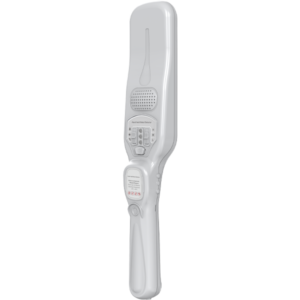
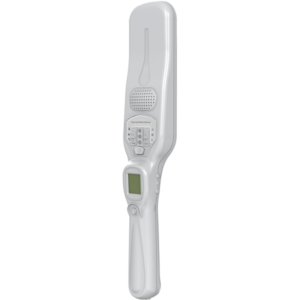
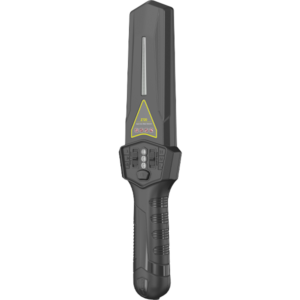
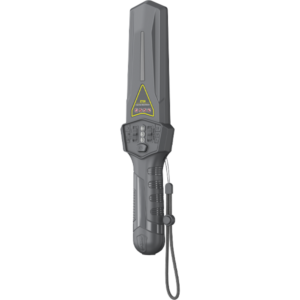
Even the most advanced walk-through gates require a reliable secondary screening layer to handle isolated alerts. Handheld metal detector wands serve as the vital tactical link in this process. When a multi-zone walk-through gate signals an alert, the passenger is immediately directed to a secondary lane where security personnel utilize a handheld wand to isolate the source of the alarm.
ProScan Global’s handheld metal detectors are engineered for extreme durability and precision targeting. Equipped with a 360-degree detection area and uniform sensitivity across the entire length of the blade, these wands allow guards to scan rapidly across a subject’s body without missing small metallic targets.
Our wands feature adjustable sensitivity settings and instant digital toggle switches, allowing operators to filter out minor environmental interference or common pocket items while maintaining the capability to detect small knife blades, tactical pins, or disassembled weapon components. Designed with ergonomic grips and long-lasting battery architectures, they ensure that field staff can execute continuous, high-frequency physical scans throughout extended tournament shifts without performance degradation.
3. X-ray baggage scanners for bags and personal belongings
Pedestrian screening addresses on-person threats, but managing the massive influx of personal belongings, backpacks, media equipment, and corporate logistics requires heavy-duty imaging technology. High-precision X-ray baggage scanners are deployed directly alongside the walk-through gates to examine all carried items.
ProScan Global’s B2B X-ray scanning solutions utilize advanced dual-energy imaging technology to generate ultra-clear, color-coded internal views of inspected baggage. The system automatically differentiates materials based on their effective atomic number (Zeff), cleanly separating organic substances (such as plastics, liquids, and potential explosive compounds) from inorganic materials (like aluminum or steel) and dense, impenetrable materials (such as lead shielding).
These digital layers scan the live image feed in real-time, instantly highlighting anomalies such as wires, firing pins, or organic masses that match the signature of weapon components or explosive devices. This drastically reduces the cognitive load on security operators, preventing oversight caused by fatigue during long operational windows.
4. Shoe scanners for enhanced security screening
One of the most critical vulnerabilities in standard pedestrian checkpoints is the footwear zone. Traditional walk-through metal detectors can struggle to accurately differentiate between harmless structural components inside a shoe-such as steel shanks or decorative eyelets-and deliberately concealed contraband, such as micro-weapons, razor blades, or ceramic-encased explosive components. Forcing thousands of international fans to remove their footwear for manual x-ray processing is a logistical disaster that causes massive operational delays.
To resolve this bottleneck, ProScan Global provides dedicated shoe scanners engineered for sub-floor metal analysis. These specialized, low-profile units allow spectators to simply step onto a dedicated scanning platform without removing their shoes. Utilizing highly localized, high-frequency electromagnetic sensors, the shoe scanner analyzes the lower extremities in less than two seconds, instantly mapping the metallic footprint of the footwear.
If the system detects an anomalous mass or an irregular metallic distribution that deviates from standard shoe construction, it triggers a discrete, localized alert for secondary screening. This targeted approach allows stadium operators to close a notorious security loophole while maintaining the rapid, continuous passenger throughput demanded at elite international sporting events.
The importance of integrated security systems for mega sporting events
While individual high-performance hardware units are essential, deploying them as isolated checkpoints is insufficient for a modern World Cup venue. The complexity of managing multiple stadiums, training facilities, and VIP zones simultaneously requires a shift toward fully Integrated Security Systems. When walk-through gates, X-ray baggage scanners, shoe scanners, and Under Vehicle Screening Systems (UVSS) are networked into a single, centralized command center, they cease to be standalone barriers and become an active, unified intelligence network.
ProScan Global achieves this high-level integration by equipping our hardware with robust communication protocols, including TCP/IP interfaces and dedicated API architectures. This structural connectivity provides system integrators with three distinct operational advantages:
- Centralized telemetry tracking: Venue command centers can monitor the exact throughput rates and alarm percentages of every entry gate across the entire stadium perimeter in real-time. If a specific gate experiences an unusual spike in false alarms, engineers can adjust its sensitivity matrix remotely to keep traffic moving.
- Cross-node threat correlation: If an Under Vehicle Screening System identifies a structural anomaly beneath a logistics vehicle, the central network can instantly push automated alerts to nearby pedestrian checkpoints, prompting security personnel to increase their screening depth.
- Data-driven predictive crowd flow: By analyzing real-time passenger counts from our multi-zone gates, stadium operators can dynamically reroute incoming crowds toward under-utilized entrances, completely preventing dangerous crowd build-ups in soft, unprotected exterior zones.
Read more: What do walk through metal detectors detect? And what cannot be picked up?
Can a non-ferrous metal detector detect?
Case of protect World Cup of ProScan Global’s security equipment
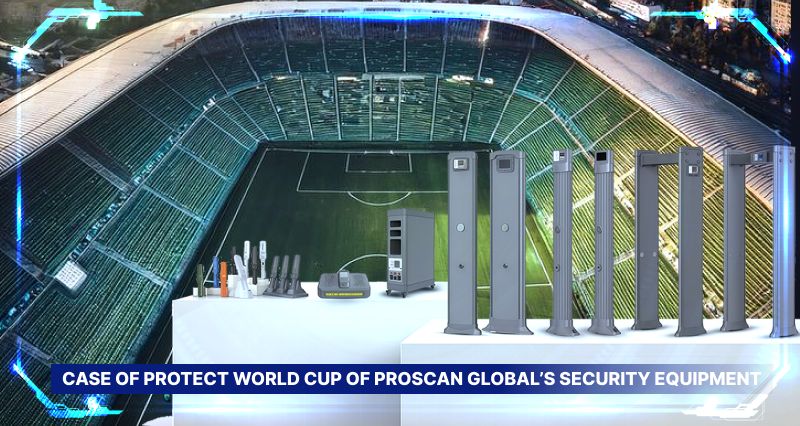
ProScan Global’s reputation as a reliable OEM/ODM partner is backed by proven performance in securing high-profile international tenders and large-scale public events of our partners. Our hardware configurations are engineered specifically to satisfy the strict requirements of international sporting associations, municipal police forces, and government procurement committees.
A defining milestone in our global deployment track record occurred during the FIFA World Cup 2018, where ProScan Global’s core manufacturing capabilities were heavily relied upon by our regional integration partners.
For this massive international tournament, our factory successfully fabricated, calibrated, and shipped a high volume of security screening units deployed across multiple key venues and official fan zones. Operating under rigid international safety and delivery timelines, our automated production lines executed rapid-deployment protocols, ensuring that hundreds of multi-zone walk-through metal detectors and dual-energy X-ray scanners were fully operational before the opening match.
Throughout the entire tournament, these units handled relentless passenger throughput, operating continuously under intense environmental pressure and high-frequency crowd stress. By providing field-tested hardware that withstands both heavy physical use and intense outdoor weather, we ensured that stadium operations ran smoothly from the group stages to the final trophy presentation-protecting millions of international fans, athletes, and media professionals without a single perimeter breach or technical failure.
ProScan Global: The future of intelligent security inspection.
- 20+ Years of R&D excellence;
- Robot-automated manufacturing for 100% coil stability;
- Full spectrum OEM/ODM: walkthrough metal detector, handheld and shoe scanners.
Partner with us now:
- Website: proscanglobal.com;
- Email: support@proscanglobal.com;
- Phone number: +84 783905459;
- Facebook: facebook.com/proscanglobal/.
Securing a mega sporting event like the World Cup requires an uncompromising commitment to engineering precision, regulatory compliance, and operational efficiency. As we have explored, managing massive crowds while intercepting modern, asymmetric threats demands a multi-layered hardware framework that seamlessly processes fans without causing logistical delays. By providing a comprehensive, factory-certified product ecosystem, ProScan Global empowers system integrators and tournament organizers to build uncompromised lines of defense.