
Securing modern facilities against non-magnetic threats requires specialized screening technology. Identifying the best non ferrous metal detector is crucial for detecting aluminum, copper, and brass contraband. ProScan Global delivers intelligent security solutions, including walk-through arches, handheld detectors, shoe scanners, and under-vehicle surveillance systems.
What is a non ferrous metal detector?
A non-ferrous metal detector is designed to detect metals that do not primarily contain iron, such as aluminum, copper, brass, and similar conductive metals. Detection performance depends on the detector’s technology, sensitivity, target characteristics, coil/sensor design, and operating environment.
1. How does a metal detector detect non-ferrous metals?
Metal detectors utilize active electromagnetic coils to generate alternating magnetic fields that probe the surrounding environment. When a conductive non-ferrous object enters this magnetic field, it experiences electromagnetic induction, generating secondary electrical currents known as eddy currents.
Because non-ferrous materials lack magnetic permeability, detection relies entirely on these induced eddy currents interacting with receiver coils. High electrical conductivity in materials like copper and aluminum facilitates strong secondary responses, allowing professional inspection hardware to register the object and trigger immediate security alerts.
2. Why is non-ferrous detection important?
Many modern threat items and prohibited components are constructed from lightweight, non-ferrous metals that bypass traditional magnetic-only screening systems.
Industries and high-security checkpoints require dedicated non-ferrous screening capability to intercept non-magnetic weapons, smuggled precious metals, and specialized industrial components. Ensuring comprehensive coverage prevents security vulnerabilities and maintains rigorous access control compliance across commercial and sensitive facilities.
Read more: Can a non-ferrous metal detector detect?
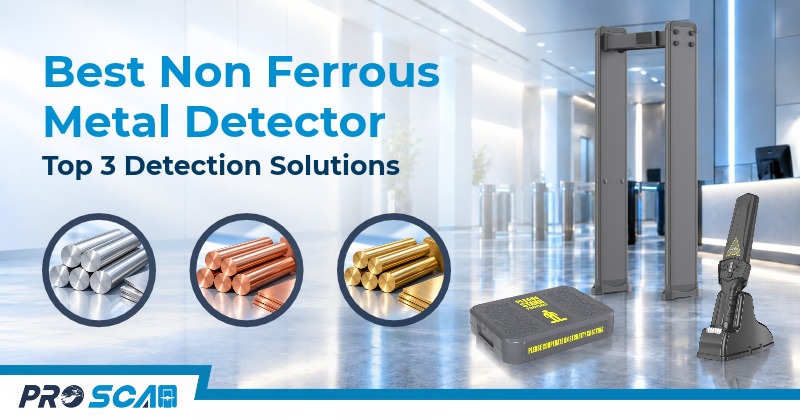
Top 3 best non ferrous metal detector
1. Walk-through metal detector
Walk-through inspection arches provide multi-zone vertical and horizontal coverage, utilizing advanced electromagnetic fields to screen high-volume passenger traffic seamlessly and isolate non-ferrous contraband instantly.


2. Handheld metal detector
Handheld scanning wands offer localized precision, allowing security personnel to pinpoint concealed non-ferrous metallic items during secondary inspections with high operational sensitivity.
3. Shoe scanner
Specialized floor-mounted shoe screening portals detect hidden non-ferrous objects and contraband concealed footwear layers at high-security access control checkpoints.
What makes the best non ferrous metal detector?
The best non-ferrous metal detector is not necessarily the detector with the highest advertised sensitivity. For professional use, the right choice should provide an appropriate balance of detection performance, stability, discrimination, usability, durability, and application suitability.
Building upon our previous exploration of walk-through arches, handheld wands, and specialized shoe scanners, selecting top-tier inspection hardware requires looking past raw sensitivity metrics.
In real-world security and industrial environments, a device tuned to maximum sensitivity without adequate background noise suppression will suffer from excessive false alarms, disrupting workflow and reducing operator efficiency. Achieving an optimal balance across core engineering and operational parameters ensures that security equipment remains dependable under rigorous, continuous deployment. (1)
1. High and consistent detection sensitivity
Maintaining high and consistent detection sensitivity ensures that inspection portals can reliably register small, low-mass non-ferrous components such as copper wiring, aluminum fragments, or specialized metallic contraband without signal degradation across varying entry lanes.
2. Detection stability
Detection stability prevents environmental electromagnetic interference, temperature variations, and structural vibrations from causing drift or false triggers, ensuring uniform calibration throughout extended multi-shift operational cycles.
3. Target discrimination
Target discrimination capabilities allow advanced screening systems to differentiate between conductive non-ferrous threat objects and harmless personal items like jewelry, keys, or foil packaging, thereby minimizing unnecessary manual searches.
4. Durable construction
Durable construction and ruggedized physical architecture protect internal coils and microprocessors from heavy impact, dust, and moisture exposure, ensuring long-term hardware reliability in demanding industrial or high-traffic public access checkpoints.

What is the best non ferrous metal detector for different applications?
There is no single non-ferrous metal detector that is best for every application. The appropriate equipment depends on the inspection target, screening volume, environment, required sensitivity, and operational workflow.
Transitioning from general performance attributes to specific sector requirements, deploying the ideal inspection solution demands matching hardware capabilities to the operational realities of a given facility.
Whether managing high-volume passenger traffic at an international transport hub, securing corporate entries, or monitoring industrial production lines, tailoring the detection profile prevents operational bottlenecks. Integrating the right best non ferrous metal detector configuration into specific checkpoints guarantees maximum threat interception while supporting smooth, uninterrupted workflow management.
1. Non-ferrous detection for security screening
Security screening checkpoints at aviation terminals, government buildings, and major event venues require rapid, multi-zone walk-through arches and precision handheld wands to detect concealed non-ferrous weapons without slowing down visitor throughput.
2. Non-ferrous detection in commercial facilities
Commercial facilities and corporate headquarters benefit from discreet yet highly reliable inspection arches and accessory scanners that identify unauthorized removal or entry of valuable non-ferrous assets, electronics, and restricted materials.
3. Non-ferrous detection in industrial environments
Industrial settings utilize robust screening portals and specialized inspection mechanisms to continuously monitor material streams, protecting heavy machinery from damaging non-ferrous metallic debris and ensuring strict quality control compliance.
Read more: Ferrous and non ferrous metal detector.
Why choose ProScan Global for non ferrous metal detector?
Transitioning from application-specific deployment strategies to hardware acquisition, partnering with an industry leader is essential for outfitting facilities with dependable security infrastructure.
ProScan stands at the forefront of intelligent security inspection solutions, delivering advanced hardware engineered to satisfy the rigorous demands of global commercial, industrial, and governmental security sectors.
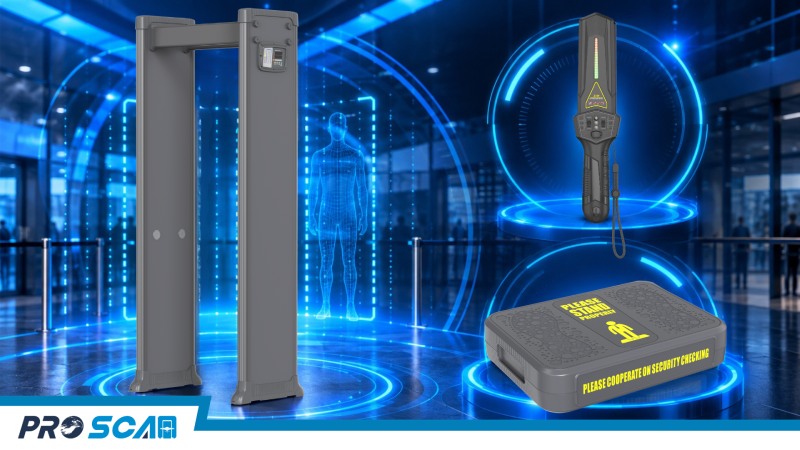
Organizations seeking elite inspection equipment benefit from ProScan Global’s comprehensive product ecosystem, which includes high-performance handheld screening wands, versatile walk-through metal detector arches, advanced shoe scanners, and robust under-vehicle surveillance systems.
Choosing the best non-ferrous metal detection solution is critical for establishing secure access control, protecting industrial machinery, and ensuring operational safety. Throughout this guide, we explored non-ferrous detection principles, top-tier hardware configurations, performance factors, and application strategies.