
Precision security screening requires meticulous electromagnetic engineering across every physical sensor component. At the center of continuous-wave screening performance lies optimal VLF metal detector coil design, which governs how well search heads capture signal variations. ProScan Global delivers advanced intelligent security solutions tailored for checkpoints.
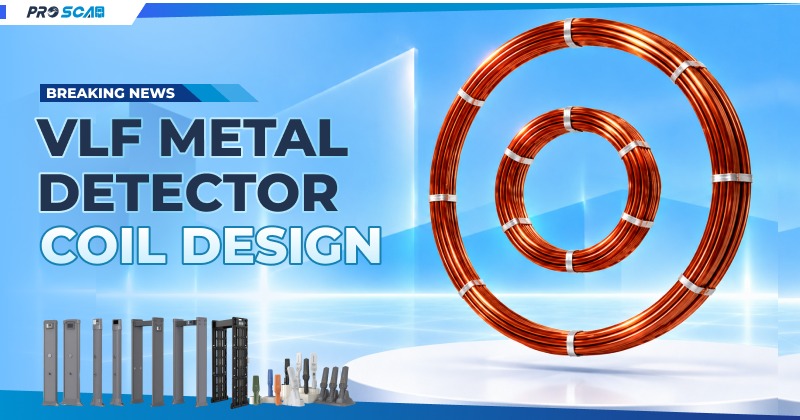
What is VLF metal detector coil design?
VLF metal detector coil design refers to the engineering of the search coil used in a very-low-frequency metal detection system. Its geometry, winding configuration, electrical characteristics and relationship with the detector circuitry all influence detection sensitivity, stability and overall performance.
1. The role of the search coil in a VLF metal detector
The search coil acts as the vital frontline interface between detector electronics and the screening environment. By translating electrical currents into primary magnetic fields and receiving secondary target feedback, the search head drives the entire detection process in handheld devices and walk-through portals.
2. Main components of a VLF search coil
A professional search assembly comprises precise transmitter loops, receiver windings, internal shielding materials, and robust protective housings. These elements work together to project stable electromagnetic flux while shielding internal circuits from ambient environmental disturbances.
3. Why coil design matters for detection performance
Proper winding configuration and structural symmetry ensure uniform field distribution across the scanning zone. Meticulous VLF metal detector coil design prevents environmental noise vulnerability, eliminating false alarms and missed threat items during high-throughput screening operations.
How does a VLF metal detector coil work?
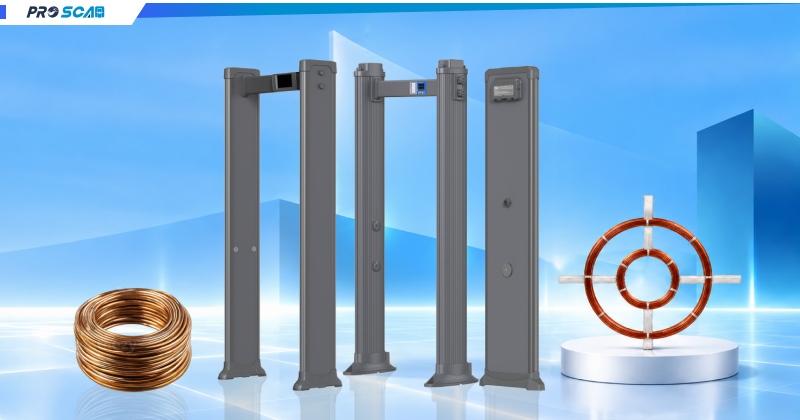
A VLF coil works by generating an electromagnetic field and detecting changes in the received signal when a conductive or magnetic target interacts with that field. The detector’s electronics process these signal changes to identify potential metallic targets.
1. Transmit and receive signals
The operational cycle begins when alternating current flows through the transmitting wire loops, generating a stable primary magnetic field across the inspection corridor. Simultaneously, the receiving windings maintain an active listening state, balanced against the primary transmission to keep a stable baseline.
2. Electromagnetic field and target response
When a conductive or magnetizable object enters the active field, the primary flux induces internal eddy currents within the target. These induced currents generate secondary magnetic fields that interact directly with the receiving loop, carrying unique phase and amplitude characteristics defined by the target’s material properties.
3. Signal processing in VLF detection
Once the receiver captures the altered voltage state, internal microprocessors analyze the signal shifts through advanced phase-sensitive filtering algorithms. This circuitry separates genuine threat signatures from background noise, triggering immediate alerts for security personnel operating walk-through portals or portable screening units. (1)
What are the main factors in VLF metal detector coil design?
The main factors include coil geometry, winding configuration, operating frequency, inductance, resistance, coil size, shielding, mechanical construction and compatibility with the detector’s electronics.
1. Coil geometry and shape
The physical layout and contour of the wire windings dictate how electromagnetic flux spreads across the inspection space. Symmetrical geometries ensure balanced field distribution, eliminating dead zones and providing consistent target acquisition regardless of where an item passes through the detection portal or scanning zone.
2. Coil size
Physical dimensions directly influence spatial coverage and depth penetration. Larger search footprints cover broad inspection areas quickly, while compact configurations concentrate electromagnetic energy to isolate closely grouped metallic objects with exceptional precision during targeted screenings.
3. Coil winding configuration
The specific arrangement of loops-whether concentric, mono, or overlapping-determines how the system handles primary-field nulling and environmental mineralization. Proper winding architecture is essential for maintaining signal stability under challenging physical conditions.
4. Inductance and electrical characteristics
Electrical parameters such as coil inductance, capacitance, and resistance govern how efficiently the search head responds to alternating current. Matching these values precisely to the detector’s drive circuitry ensures maximum energy transfer and long-term operational reliability.
How does operating frequency affect VLF coil design?
Operating frequency directly affects how the VLF system interacts with different targets and environments, so the coil’s electrical characteristics must be compatible with the detector’s intended operating frequency.
1. Relationship between frequency and coil characteristics
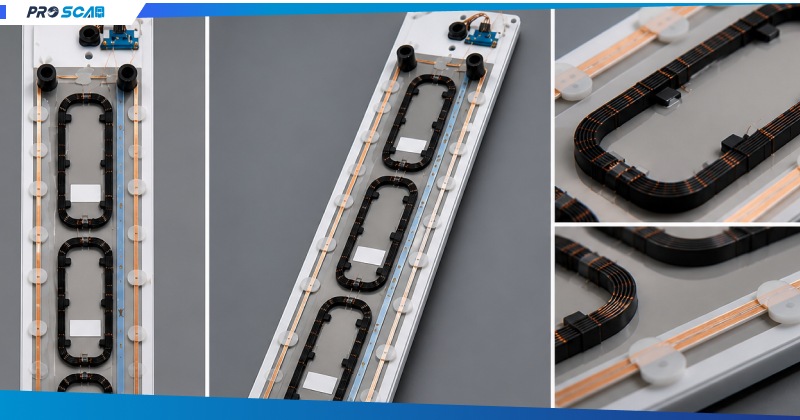
The selected operating frequency places strict physical and electrical demands on the search coil architecture. Because alternating current cycles through the windings at a specific rate, the coil’s inductance and capacitance must be precisely calibrated to resonate efficiently at that frequency without generating excessive thermal buildup or signal distortion.
Engineers must balance the number of wire turns and winding geometry to ensure the electromagnetic field remains stable across the designated spectrum.
2. Lower vs higher VLF frequencies
Lower operating frequencies project deep electromagnetic waves that easily penetrate mineralized soil and are exceptionally responsive to large, highly conductive targets. In contrast, higher operating frequencies cycle rapidly, producing stronger eddy current responses in thin objects, small metallic fragments, or low-conductivity items.
The coil configuration must be tailored to support these distinct frequency bands, optimizing either deep-range scanning or high-resolution surface inspection based on checkpoint requirements.
3. Frequency stability in professional detection systems
Maintaining frequency stability is vital for preventing cross-talk and false alarms in high-security environments where multiple electronic screening devices operate simultaneously. Professional VLF metal detector coil design incorporates specialized shielding and rigid housing to protect internal wire loops from physical vibration and thermal drift.
This rigorous engineering ensures that the operating frequency remains locked, delivering consistent, reliable detection performance day after day.
How does coil design affect VLF metal detector sensitivity?
Coil design can significantly influence sensitivity because the coil determines the electromagnetic field and the quality of the signal received from a target. However, sensitivity also depends on the detector electronics, signal processing and operating environment.
1. Coil size and detection sensitivity
The physical dimensions of the search head directly dictate its sensitivity profile and volumetric coverage. Compact coils concentrate electromagnetic energy into a smaller spatial footprint, enhancing sensitivity to tiny objects and improving target separation in cluttered environments. Larger search heads project broader fields that capture signals from greater distances, though they require careful electronic balancing to maintain detection accuracy for smaller items.
2. Signal-to-noise ratio
A well-engineered search coil maximizes the strength of the return signal while actively suppressing ambient electromagnetic interference and environmental noise. By optimizing the balance between the transmitting and receiving windings, the coil improves the signal-to-noise ratio, allowing internal microprocessors to distinguish genuine threat signatures from background electrical disturbances.
3. Coil stability and consistent detection
Structural rigidity within the search head prevents physical flexing during rapid scanning operations, which can otherwise cause minor fluctuations in coil geometry and trigger false alarms. Maintaining permanent, rigid alignment between the wire loops ensures that the electromagnetic baseline remains steady, guaranteeing uniform detection sensitivity across every sweep.
4. Balancing sensitivity and false alarms
While maximum sensitivity is a primary goal in security inspection, overly aggressive amplification can leave the system vulnerable to environmental interference and structural metal feedback. Advanced coil engineering works hand-in-hand with sophisticated signal processing to strike the ideal balance, delivering high sensitivity to concealed weapons and contraband while minimizing nuisance alarms.
Read more: How does pulse induction metal detector work?
Why choose ProScan Global for OEM/ODM intelligent security inspection solutions?
When facility managers, security consultants, and government agencies demand uncompromising perimeter security and precision screening, ProScan stands as a trusted industry leader in intelligent security inspection solutions.
Combining years of manufacturing excellence with rigorous quality assurance, ProScan Global delivers an extensive portfolio of advanced security equipment, including high-performance handheld metal detectors, modular walk-through arches, specialized shoe scanners, and sophisticated under vehicle surveillance systems.
ProScan Global’s core engineering philosophy centers on reliability, precision calibration, and operational versatility. By offering robust OEM and ODM customization options, ProScan Global empowers security partners worldwide to tailor detection sensitivity, physical dimensions, and software integration to their exact operational requirements.
Choosing ProScan Global ensures your facilities are fortified with state-of-the-art mobile and fixed security technology engineered for absolute safety and operational excellence.
FAQs about VLF metal detector coil design
1. Can VLF metal detector coils be customized?
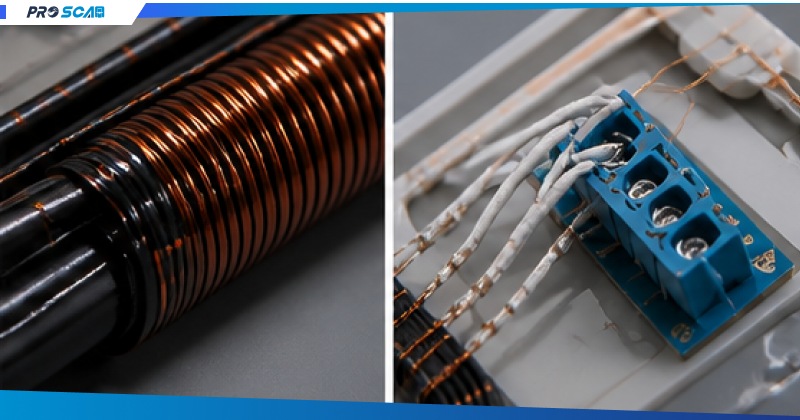
Yes, search coils can be customized in terms of physical geometry, size, winding configuration, and operating frequency to meet specialized security screening applications or unique checkpoint spatial constraints.
2. Can a VLF coil be replaced with a different coil?
Replacing a search coil requires careful electrical matching with the detector’s driving circuitry and operating frequency; using an incompatible coil can disrupt signal balance and degrade overall detection performance.
In summary, mastering the engineering principles behind VLF metal detector coil design is essential for developing high-performance screening infrastructure. Throughout this guide, we have explored the core components, electromagnetic mechanisms, frequency relationships, and sensitivity factors that govern search head performance. As security challenges continue to evolve across public venues, transport hubs, and industrial facilities, selecting precision-engineered equipment remains paramount.