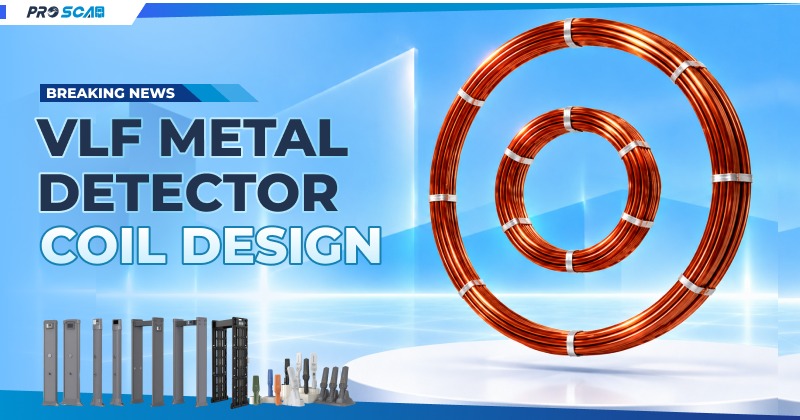
Among the foundational innovations utilized in advanced screening architectures is the VLF metal detector, a sophisticated device engineered to identify hidden metallic objects by evaluating electromagnetic field variations. Whether integrated into portable scanning devices or comprehensive checkpoint installations, Very Low Frequency engineering offers unmatched reliability in discriminating between harmless items and prohibited metallic threats.

What is a VLF metal detector?
A VLF metal detector is a metal detection system that operates using Very Low Frequency electromagnetic signals to detect changes caused by metallic targets.
1. What does VLF mean on a metal detector?
In the context of professional security screening equipment, the designation VLF stands for Very Low Frequency, denoting the specific electromagnetic spectrum range utilized for continuous wave transmission.
When examining what does VLF means on a metal detector, engineers focus on the continuous alternating current cycling through the transmitting coils, which typically operates within a low-frequency band to penetrate various media effectively.
This specific frequency designation ensures that the equipment can project stable electromagnetic waves capable of interacting smoothly with conductive and magnetizable items without excessive environmental distortion.
2. VLF metal detector meaning in practical applications
Evaluating the VLF metal detector meaning in operational settings involves understanding how continuous wave electromagnetic fields translate into reliable threat detection at security checkpoints.
In practical applications, these detectors are valued for their ability to provide stable baseline operations while remaining sensitive to both ferrous and non-ferrous metallic objects. This dual capability makes them indispensable for screening personnel, baggage, and cargo where diverse material composition must be accurately assessed in real time.
3. How VLF differs from other metal detection technologies
Unlike pulse induction (PI) systems that rely on short, powerful bursts of current followed by listening periods, a very low frequency VLF metal detector maintains a continuous transmission and reception cycle. This continuous architecture allows the system to perform real-time phase analysis, granting it superior target discrimination capabilities compared to pulse-based alternatives.
While pulse systems excel in heavily mineralized ground or extreme saltwater environments by ignoring minor ground interference, a VLF very low frequency metal detector provides superior discrimination of specific metal types and object geometries.
4. Why VLF technology is used in metal detection
The widespread adoption of metal detector VLF systems across security and industrial sectors stems from their remarkable versatility and precision. By leveraging continuous wave electromagnetic fields, these units can differentiate between various metals based on their conductivity and phase response.
This capability minimizes nuisance alarms caused by harmless personal items or minor environmental mineralization, ensuring high operational throughput at security checkpoints without sacrificing rigorous safety standards.
How do VLF metal detectors work?
VLF metal detectors transmit an electromagnetic signal into the surrounding area and analyze changes in the received signal caused by nearby metallic targets.
The operational mechanics of a how do VLF metal detectors work analysis rely on continuous electromagnetic induction between the device’s internal circuitry and nearby conductive or magnetizable materials.
When evaluating how does a VLF metal detector work, technical operators look at the dual-coil architecture where one winding continuously transmits a primary alternating magnetic field while another monitors feedback. When a metallic item enters this detection space, the primary magnetic field induces electrical charges-known as eddy currents-within the object. These induced currents subsequently generate their own secondary magnetic fields that interact directly with the receiving elements.
At the core of this process, the VLF metal detector theory of operation involves sophisticated phase-shift analysis embedded within the circuit metal detector VLF architecture. As the secondary magnetic field alters the phase and amplitude of the receiver coil’s voltage, the internal signal-processing circuitry measures these minute shifts to determine the target’s conductivity and ferrous composition.
This continuous comparison allows modern screening systems to filter out background noise while providing immediate alerts when prohibited items pass through the inspection zone.
What is VLF induction balance technology?
VLF induction balance is a detection configuration in which transmit and receive elements are arranged so that the detector can analyze changes in the electromagnetic field caused by metallic targets.
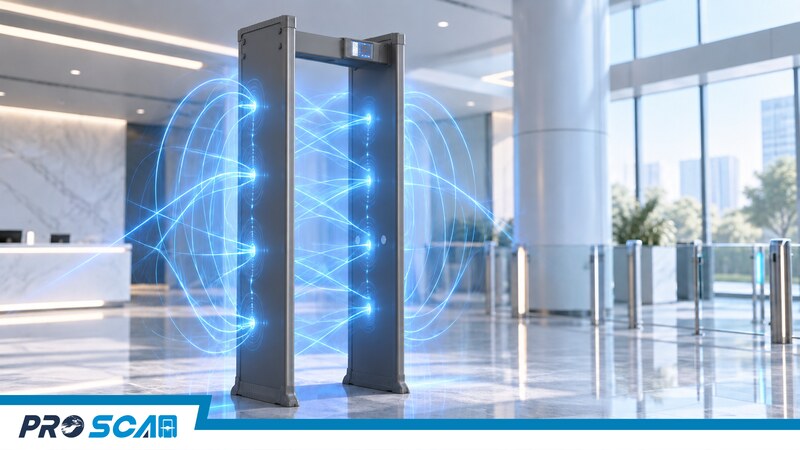
1. Transmit and receive coil functions
Induction balance systems rely on a clear separation of duties between transmitting and receiving coil windings integrated into the search head. The transmitting element continuously radiates the primary electromagnetic field into the target zone, while the receiving element remains dedicated to listening for alterations in that field.
This functional division allows the system to maintain an active, uninterrupted dialogue with the surrounding environment, instantly capturing any electromagnetic anomalies introduced by foreign objects. (1)
2. Electromagnetic field balance
Achieving stability in an induction balance architecture requires precise mechanical and electrical calibration to create a null zone where the primary transmitted signal is entirely canceled out at the receiver.
When no metallic items are present, the mutual inductance between the transmit and receive loops is balanced to near-zero volts. This delicate equilibrium forms the baseline from which all target interactions are measured, ensuring that external environmental fluctuations do not trigger false alarms.
3. How a metal target disturbs the balance
When a conductive or magnetizable object enters the detection field, it disrupts the carefully calibrated electromagnetic balance between the coils. The secondary magnetic fields generated by the target’s internal eddy currents alter the voltage induced in the receive winding, breaking the null balance.
This disturbance produces an observable signal shift that directly reflects the physical and electrical properties of the detected object.
4. Signal analysis in induction balance systems
Once the balance is disturbed, the detector’s internal signal-processing units analyze the resulting voltage changes in terms of both amplitude and phase angle. Because different metals induce distinct phase shifts based on their conductivity and inductance, the system can mathematically separate target responses from minor environmental variables.
This advanced analytical capability enables security operators to distinguish between high-conductivity threat items and benign personal belongings with exceptional accuracy. (2)
5. Why induction balance is important in VLF detection
Induction balance technology is crucial because it provides the foundational stability and discrimination power that define high-performance VLF systems. Without this precise balancing mechanism, continuous-wave detectors would be overwhelmed by primary signal bleed and background interference.
By isolating secondary target responses effectively, induction balance enables security equipment to deliver reliable, high-resolution threat detection across diverse operational settings.
What is VLF metal detector frequency?
VLF metal detector frequency refers to the operating frequency of the electromagnetic signal used by the detector. Frequency selection can influence the detector’s response to different target characteristics and operating conditions.
Operating frequency plays a fundamental role in determining how a VLF metal detector interacts with various metallic materials and environmental variables. The selected frequency dictates the rate at which the alternating current cycles through the transmitting coil, directly impacting the penetration depth and sensitivity profile.
Lower frequencies project deeper into search media and are highly effective at detecting large, highly conductive metal objects, whereas higher operating frequencies excel at identifying tiny, low-conductivity targets or thin foils by producing more pronounced eddy current responses.
Furthermore, frequency management is vital for mitigating electromagnetic interference (EMI) at busy security checkpoints. When multiple electronic devices operate in close proximity, selecting an optimal operating frequency or utilizing adjustable frequency offsets prevents cross-talk and false alarms.
Professional security equipment manufacturers engineer their systems to balance frequency stability with precise phase analysis, ensuring that operators can maintain reliable detection performance regardless of complex environmental backdrops or varying target compositions.
How to use a VLF metal detector
Using a VLF metal detector generally involves checking the equipment, selecting appropriate settings, performing an operational check, scanning the intended area consistently and interpreting the detector’s alerts according to its operating instructions.
Proper utilization of a continuous-wave screening device requires strict adherence to standardized operational protocols to guarantee maximum safety and efficiency.
- Inspect and prepare the equipment: Conduct a thorough physical check of the detector housing, sensor coils, and connecting cables to ensure there is no structural damage or moisture ingress that could compromise performance.
- Select appropriate settings: Configure the sensitivity thresholds, discrimination levels, and audio response modes according to the specific security requirements of the checkpoint and the anticipated threat profile.
- Perform an operational check: Test the detector using standardized calibration objects to confirm that audio indicators, visual lights, and response circuits are functioning correctly before opening the inspection lane.
- Scan the intended area consistently: Maintain a steady, uniform sweeping motion and a controlled distance between the search head and the target surface to ensure complete electromagnetic coverage without missing concealed items.
- Interpret the detector’s alerts: Analyze audio pitches or visual display signals immediately when an alarm triggers, following established facility procedures for secondary inspection or threat isolation.
Read more: How does pulse induction metal detector work?
What factors affect VLF metal detector performance?
Multiple electronic, environmental, and operational variables influence the overall efficiency, sensitivity, and reliability of continuous-wave screening systems.
1. Operating frequency
The chosen frequency dictates the system’s sensitivity balance, determining whether the unit prioritizes deep-penetrating detection of large metallic masses or high-resolution acquisition of small, low-conductivity targets.
2. Coil design
The physical geometry, winding configuration, and overlapping balance of the search head directly affect the uniformity of the primary electromagnetic field and the accuracy of secondary signal reception.
3. Detection sensitivity
Configuring gain and amplification thresholds properly ensures that the detector captures minute phase shifts without becoming overly sensitive to background noise or minor environmental variables.
4. Target size and material
The electrical conductivity, magnetic permeability, mass, and physical orientation of the metallic item dictate the strength of the induced eddy currents and the resulting secondary magnetic field.
5. Detection distance
As the physical separation between the search coil and the target increases, the intensity of the electromagnetic field decreases exponentially, impacting the clarity of the return signal.
6. Environmental conditions
External elements such as ground mineralization, moisture content, and temperature fluctuations can alter electrical conductivity in the surrounding medium, requiring precise ground-balancing adjustments.
7. Electromagnetic interference
Nearby power lines, radio frequency transmitters, and digital infrastructure can introduce ambient electrical noise that disrupts coil balance and triggers false positive alerts.
8. Signal processing
The sophistication of the internal microprocessor and phase-analysis algorithms determines how effectively the system filters out background interference while isolating genuine threat signatures.
9. Operator technique
Maintaining a consistent sweep speed, stable search-head height, and strict adherence to scanning protocols ensures reliable, repeatable screening results across high-volume checkpoints.
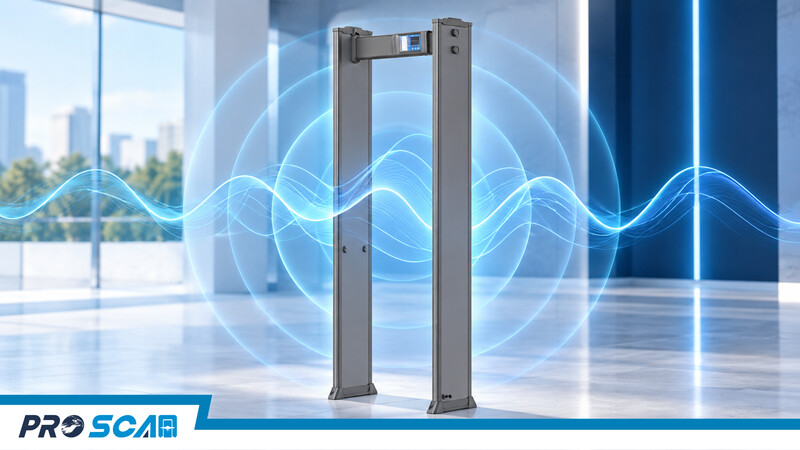
VLF metal detector price: What determines the cost?
VLF metal detector price depends on the detector’s technology, construction, detection performance, features, customization, production volume and after-sales support.
The financial investment associated with acquiring professional VLF metal detector equipment is dictated by several critical manufacturing and engineering factors. High-performance systems designed for rigorous security checkpoints incorporate advanced digital signal processors, multi-frequency capabilities, and durable, weather-resistant enclosures that increase production complexity and hardware costs.
Additionally, precision manufacturing standards-such as ISO 9001 quality assurance compliance and rigorous burn-in testing to prevent early component failure-contribute directly to the overall value and reliability of the unit.
Organizations evaluating equipment pricing must weigh initial capital expenditures against long-term operational durability, warranty protection, and the availability of custom OEM/ODM configurations tailored to specialized security environments.
ProScan Global provides VLF metal detector technologies machine
When facility managers, security consultants, and government agencies demand uncompromising perimeter security and precision screening, ProScan stands as a trusted industry leader in intelligent security inspection solutions.
Combining years of manufacturing excellence with rigorous quality assurance, ProScan Global delivers an extensive portfolio of advanced security equipment, including high-performance handheld metal detectors, modular walk-through arches, specialized shoe scanners, and sophisticated under vehicle surveillance systems.
ProScan Global’s core engineering philosophy centers on reliability, precision calibration, and operational versatility. By offering robust OEM and ODM customization options, ProScan Global empowers security partners worldwide to tailor detection sensitivity, physical dimensions, and software integration to their exact operational requirements.
In summary, mastering the principles behind VLF metal detector technology is essential for deploying effective, high-performance screening infrastructure. Throughout this guide, we have explored the fundamental electromagnetic mechanics of continuous-wave transmission, induction balance configurations, frequency selection, operational techniques, and key purchasing considerations.