Handheld security wands serve as the ultimate tool for secondary inspections, enabling officers to pinpoint concealed metallic threats with absolute precision. However, even the most advanced electromagnetic scanning technology is rendered useless if its power source fails. Ensuring reliable operation begins with understanding the hand held metal detector battery. In this comprehensive guide, we explore the engineering, chemistry, and operational management of power sources for portable inspection equipment, helping security teams maintain peak operational readiness.
What is a hand held metal detector battery?
A handheld metal detector battery is the primary power source that enables the detector to generate its electromagnetic field and perform continuous metal detection. Depending on the model, it may use disposable batteries or rechargeable battery packs.
When analyzing what constitutes a hand held metal detector battery, one must look closely at the electrical demands placed on portable scanning hardware. Unlike static walk-through gates connected to a building’s main electrical grid, handheld units must generate a stable, continuous electromagnetic induction field entirely from a compact internal power source.
The battery supplies the necessary voltage to the internal oscillator circuits and copper transmission coils, ensuring that the device can continuously transmit and receive signals without experiencing voltage drop or signal degradation during active sweeps.
1. Why does battery performance matter?
The stability of the power supply directly dictates the structural integrity of the detector’s electromagnetic field. If a power source begins to degrade or output unstable voltage, the transmission coil weakens, resulting in a shrinking detection radius and potential blind spots.
In professional security screening, a failing power cell can lead to missed weapons or contraband, introducing catastrophic vulnerabilities into a facility’s access control checkpoint. High-performance battery management ensures that the device maintains uniform sensitivity from the first screening of the shift to the last.
2. Battery-powered vs externally powered detectors
While walk-through portals rely on permanent AC power lines with integrated battery backups for grid failures, handheld wands are exclusively battery-powered to maximize mobility and operator agility.
Security personnel must be able to move fluidly around crowds, inspect vehicles, or conduct targeted secondary pat-downs without being tethered by power cords. This complete portability requires power systems that pack high energy density into a lightweight, compact footprint that does not fatigue the operator during long, high-stress shifts.
3. Common power requirements for handheld security equipment
Professional security wands typically operate within a designated low-voltage range-commonly between 2.5V and 9V-depending on the internal circuitry design.
Modern intelligent detectors are engineered with power-regulation microprocessors that draw minimal current during standby modes while instantly ramping up power output the moment an object enters the electromagnetic field or an alarm is triggered. Understanding these electrical parameters ensures that facilities choose compatible, high-grade replacement cells that align with manufacturer specifications.
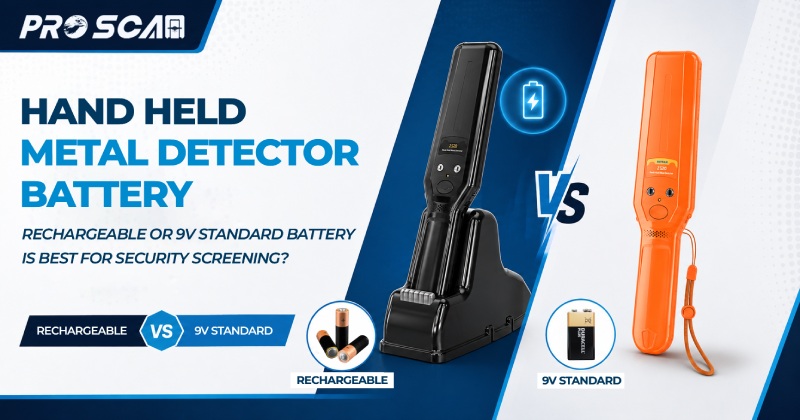
Hand held metal detector with rechargeable battery
Modern facility management increasingly favors efficiency, sustainability, and long-term cost reduction, making the hand held metal detector with rechargeable battery an industry standard for high-traffic environments.
1. Benefits of rechargeable battery systems
Implementing rechargeable power systems eliminates the logistical burden and recurring operational expense of constantly purchasing and disposing of single-use alkaline cells. For high-volume checkpoints that operate continuously throughout the day, rechargeable units can be docked on smart charging stations between shifts, ensuring that security personnel always pick up a fully energized wand without worrying about sudden power loss during peak hours.
2. Lithium-ion vs NiMH rechargeable batteries
When selecting rechargeable configurations, manufacturers and buyers typically choose between Nickel-Metal Hydride (NiMH) and Lithium-ion (Li-ion) chemistries. NiMH cells offer reliable performance and excellent discharge curves at an economical price point.
Conversely, modern Lithium-ion batteries deliver higher energy density, lighter weight, and zero memory effect, allowing for extended runtimes between charges and faster recovery cycles on smart charging cradles. (1)
3. Charging methods and charging time
Advanced portable security equipment often incorporates flexible charging architectures, including direct DC charging ports, drop-in desktop charging cradles, or dedicated smart charging stations.
Typical charging protocols are engineered to safely replenish a fully depleted pack within a few hours, allowing facilities operating multi-shift schedules to rotate wands seamlessly without leaving checkpoints un-serviced.
4. Best applications for rechargeable models
Rechargeable units are ideally suited for permanent, high-frequency security checkpoints such as airports, correctional facilities, and major entertainment venues where wands are in almost constant daily use. In these environments, the volume of screenings justifies the investment in dedicated charging infrastructure, drastically lowering the facility’s consumable waste and ongoing operational expenditures.
Read more: Top 3 best handheld metal detector.
Hand held metal detector 9V standard battery
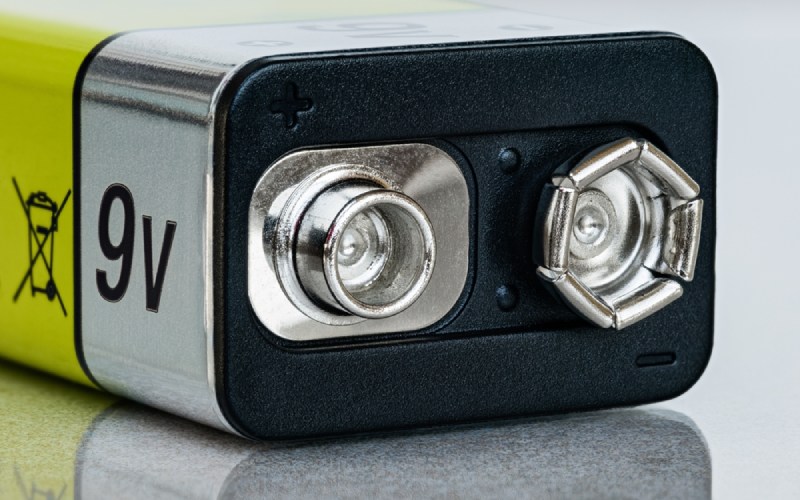
Despite the rise of advanced lithium packs, the traditional hand held metal detector 9V standard battery remains a ubiquitous and highly reliable power option across many legacy and field-deployed security operations.
1. Why manufacturers choose 9V batteries
The 9V rectangular battery format has long been a staple in portable electronics due to its compact rectangular geometry, standardized terminal layout, and ability to deliver a stable, reliable voltage output in a small form factor.
Many ruggedized, field-ready handheld wands are designed to accept standard 9V alkaline cells because they allow security personnel to operate entirely independently of charging infrastructure-a critical advantage in remote deployments, mobile checkpoints, or emergency response scenarios where electrical grids are unavailable.
2. Typical runtime of a 9V battery
A high-quality alkaline 9V battery can provide dozens of hours of active scanning time, depending on how frequently the device triggers alarms and whether audible or vibratory alert modes are engaged.
Because the internal circuitry of modern detectors is optimized for low power draw during idle states, a single standard battery can often support multiple shifts of intermittent screening before requiring replacement.
3. Advantages and limitations
The primary advantage of the 9V standard format is universal availability and zero downtime for charging-if a battery dies, an operator can swap it out for a fresh cell in seconds. However, the limitation lies in long-term operational costs and environmental impact, as frequent replacement of disposable alkaline cells generates continuous consumable waste that must be managed by the facility.
4. Replacement recommendations
When utilizing standard 9V cells, security supervisors must mandate the use of premium, industrial-grade alkaline or lithium disposable batteries. Cheap, unbranded carbon-zinc cells often suffer from rapid voltage sag under load, which can trigger premature low-battery warnings or compromise the sensitivity of the detector’s electromagnetic field. Proper inventory rotation ensures that fresh cells are always ready at the checkpoint.
How to choose the right battery for a hand held metal detector
Selecting the optimal power source for portable screening equipment is a strategic decision that directly impacts operational continuity, workflow efficiency, and long-term inspection accuracy.
When facility directors evaluate options for a battery for hand held metal detector deployment, they must carefully balance technical power requirements against the realities of their daily security environment. Making an informed choice ensures that security personnel are never left with failing equipment during critical screening windows.
1. Daily screening volume
The frequency and duration of checkpoint operations dictate your power consumption profile. Facilities with continuous, high-volume screening requirements-such as international transit hubs, correctional facilities, or major event arenas-operate their inspection wands almost non-stop throughout the day.
For these intensive environments, high-capacity rechargeable power solutions paired with smart docking stations are essential to sustain heavy multi-shift usage without depleting power reserves.
2. Operating environment
The physical conditions of the deployment site heavily influence battery performance. Extreme temperatures-whether the freezing cold of an outdoor winter checkpoint or the intense heat of an unshaded summer gate-can degrade battery chemistry, reducing overall runtimes and destabilizing voltage output.
Security teams operating in remote or mobile field locations where power grids are inaccessible often lean toward standard disposable cells, which offer immediate readiness without requiring access to electrical charging infrastructure.
3. Battery availability
Logistical simplicity is vital for uninterrupted security management. Selecting a power format that relies on readily available, standardized specifications ensures that replacement cells can be sourced quickly without lengthy supply chain delays.
Whether stocking standard industrial-grade 9V alkaline cells or specialized rechargeable battery packs provided by the original equipment manufacturer, maintaining a well-audited reserve stock prevents unexpected equipment downtime.
4. Long-term cost considerations
Procurement decisions must account for the total cost of ownership (TCO) over the lifecycle of the security equipment. While disposable batteries feature a low initial purchase cost, purchasing single-use cells continuously over years of heavy operation accumulates significant recurring expenses and generates substantial consumable waste.
Conversely, investing in high-cycle rechargeable systems involves a higher initial outlay for charging infrastructure but drastically reduces operational expenditures and environmental impact over the lifespan of the hardware.
How battery performance affects metal detector accuracy

The relationship between the internal power source and the device’s diagnostic capabilities is direct and absolute. A handheld scanner is a precision instrument driven by electromagnetic induction; any instability in its power supply immediately compromises its ability to accurately detect and locate metallic anomalies.
1. Stable voltage and detection sensitivity
Modern handheld inspection wands operate within strict voltage parameters, typically ranging from 2.5V to 9V. As a battery discharges and loses charge, maintaining a stable electrical current to the transmission coils is crucial.
Intelligent circuit design utilizes internal voltage regulation to ensure that the electromagnetic field remains uniform and strong, preventing sensitivity loss as the power cell gradually drains during a shift.
2. Low battery warning systems
To prevent sudden operational failures, professional inspection wands are engineered with integrated visual or auditory indicators. For instance, high-grade units feature multi-color status lights-such as a dedicated low-power indicator-that alert security officers the moment the battery drops below optimal operational thresholds.
Recognizing this warning allows personnel to swap or recharge the power cell proactively before scanning accuracy is compromised.
3. Preventing unexpected shutdowns
A sudden power loss in the middle of an active security scan creates an immediate vulnerability, halting the screening process and forcing delays at the checkpoint. High-performance power management systems ensure that the device provides ample warning prior to shutdown, eliminating abrupt equipment failures and maintaining a seamless, secure flow of visitor traffic through the checkpoint lanes.
4. Maintaining consistent screening performance
Ultimately, the primary goal of any security inspection protocol is consistency. Whether a security officer is scanning the first individual of the morning shift or the final visitor of the evening, the device must deliver the exact same level of responsiveness.
Ensuring a robust, healthy hand held metal detector battery guarantees that the coil’s electromagnetic field, audio alerts, and vibratory feedback operate at peak performance, leaving no room for error in threat detection.
Read more: Do handheld metal detectors affect people with implanted medical devices?
Why global organizations choose ProScan Global
When institutions demand uncompromised perimeter defense and tactical reliability, they partner with ProScan. With 14 years of manufacturing excellence in intelligent security inspection solutions, we have earned the trust of global clients across high-risk sectors, from international transit hubs to major educational campuses and entertainment arenas.
Our success stems from our comprehensive, factory-direct approach to security engineering:
- Advanced manufacturing capabilities: Operating from our extensive, modern production facility, we utilize automated manufacturing processes to ensure that every walk-through metal detector, handheld scanner, shoe scanner, and Under Vehicle Surveillance System (UVSS) meets rigorous quality control standards, including precise voltage regulation and circuit durability.
- OEM and ODM expertise: We understand that every facility possesses unique operational power requirements. Our engineering team specializes in customizing power management profiles, low-battery warning systems, and recharge configurations to match your exact compliance needs.
- Comprehensive ecosystem: ProScan Global provides a complete product portfolio, allowing organizations to build a fully integrated, multi-layered security architecture from a single trusted source where hardware reliability extends down to every power cell.
As we have explored throughout this guide, optimizing the performance of a hand held metal detector battery requires looking beyond basic availability to evaluate voltage stability, daily screening volumes, operating environments, and total long-term lifecycle costs. Whether your security personnel rely on a flexible hand held metal detector with rechargeable battery setup for high-volume airport terminals or prefer the standalone independence of a hand held metal detector 9V standard battery for mobile field deployments, maintaining a reliable power supply is non-negotiable for precise threat detection.